A Memo From 2032: The AI Bull Case
How AI broke the labor economy, redefined our sense of purpose, and ushered in The Second Enlightenment.

Preface
Leading economic institutions project a seismic shift in the global labor market. The IMF warns that 40% of global jobs are now highly exposed to AI automation. McKinsey research forecasts that AI could enable automation of up to 70 percent of business activities, across almost all occupations, between now and 2030.
A question I’ve been chewing on: What happens if AI automates away all jobs?
I’ve heard people cite historical precedent: ATMs resulted in more bank tellers, not less. I think there is a decent chance that Jevons Paradox plays out and that we will see entirely new categories of jobs emerge that we can’t yet imagine.
But here is why I’m not convinced.
We aren’t building another tool. We are creating artificial intelligence that will surpass human intelligence. And it’s a matter of time before this same intelligence will be harnessed in robotics. So why wouldn’t AI theoretically be able to perform the majority of jobs that human intelligence can perform?
Citrini Research paints a doomsday scenario on how the global economy unravels if we approach double-digit unemployment rates. But I haven’t seen any optimistic scenarios laid out. So I wrote one.
What follows is a fictional memo written from 2032 recounting how AI ushered in a more enlightened, utopian society. I recently read the science fiction book Accelerando, which tells a story of how AI made humans obsolete in the relentless pursuit of efficiency, where human life is deconstructed and discarded to make room for post-human algorithms.
This essay takes the opposite view, and theorizes how algorithms take over the labor economy to enable humans to forge new identities outside of labor, climbing Maslow’s hierarchy towards self-actualization. It makes some wildly optimistic assumptions and is unlikely to play out as written. But most science fiction still holds seeds of possibility. And let’s not forget that in 2022, the idea of artificial intelligence was science fiction to most of us. We are living in that future. And I think there is a non-zero chance the following hypothetical scenario could play out, especially if humanity chooses to steer the outcome towards the positive.
But the risks are dire. And I think it is likely that we will experience deep socioeconomic pain before we can collectively agree on public policy and new frameworks. The darkest hour is just before the dawn. So let’s start there.
The Second Enlightenment
June 30th, 2032
I. 2029: The Bottom
The numbers were bad and getting worse. U.S. unemployment hit 18.2% in 2029. The S&P 500 was down 38% from its October 2026 highs. The negative spiral looked like this: AI capability improved. Companies cut headcount. Displaced workers spent less. Weakened demand pressured margins. Companies bought more AI. Capability improved again. There was no natural brake.
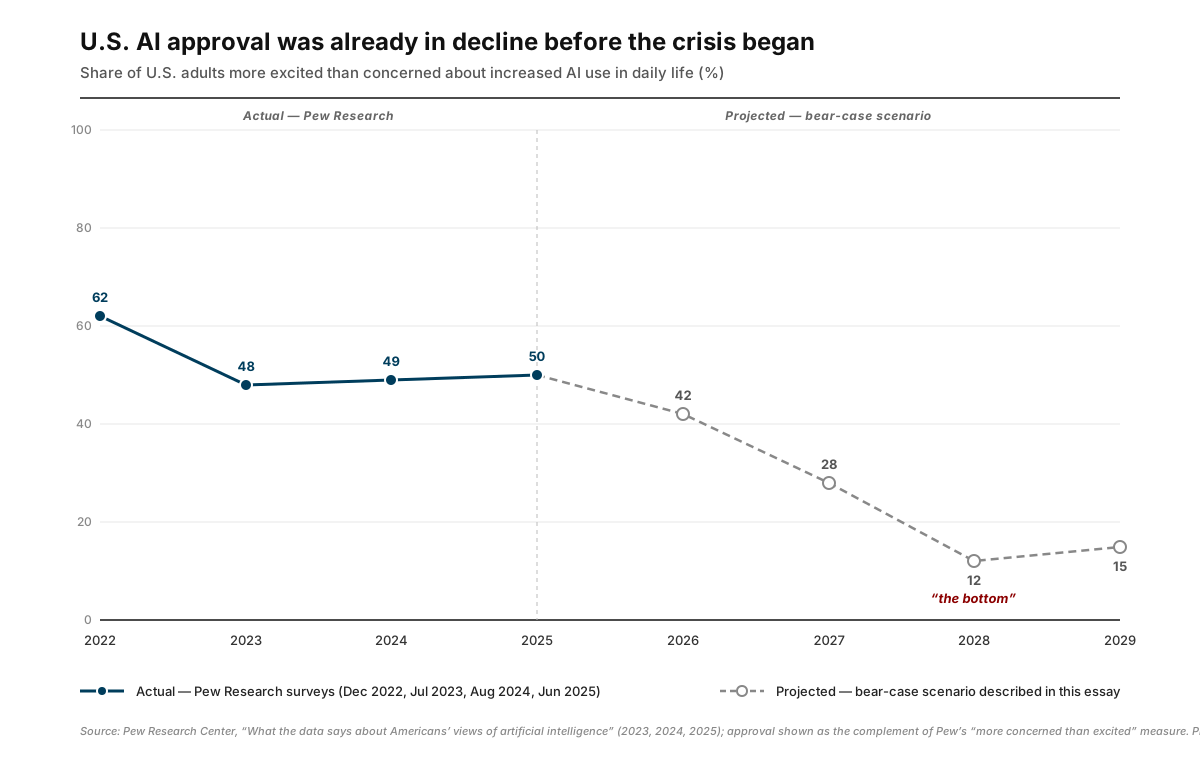
Public anger at AI eclipsed public anger at banks after 2008, and for the same structural reason. A small number of people had built something enormously profitable and the costs were being distributed to everyone else. AI, in the aggregate public sentiment polls of early 2028, ranked below tobacco companies.
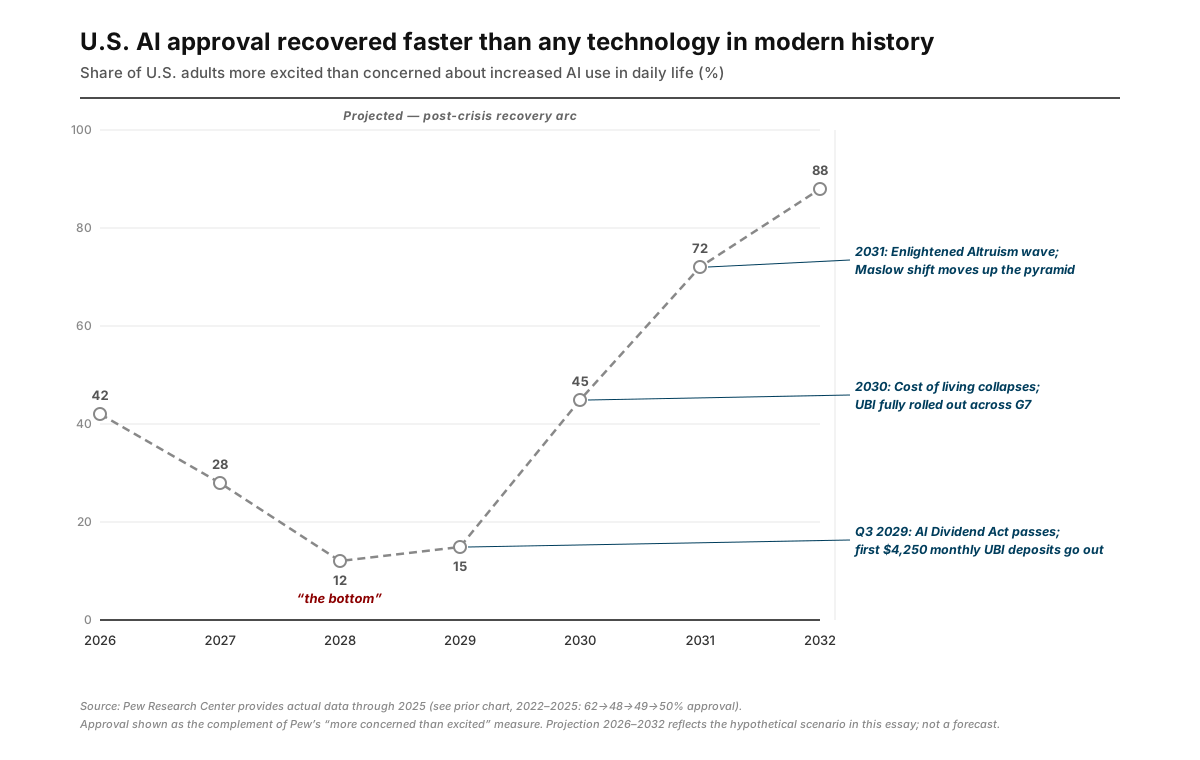
This matters, because the sentiment number is where this memo begins and ends. What followed over the next four years is, in large part, the story of how public AI sentiment inverted.
The consensus in July 2028 was that the worst was priced in. It was not. Economists had modeled the white-collar displacement spiral, but they underestimated the speed at which the same AI was embedded in robotic systems that performed manual labor with greater precision, zero fatigue, and no benefits package. Warehouses ran without human workers. Factories operated 24-hour shifts with no one on the floor. Q2 2029 employement statistics reported 70% of jobs that existed in 2022 had been automated away from humans.
The rapidly shrinking pool of workers who still held roles in the new economy, the executives, founders, investors, and the technical class that maintained the AI infrastructure were sitting in ivory towers while the rest of society was unraveling. AI had created massive wealth and concentrated it at historic levels. By late 2029, the top 1% of U.S. households held roughly $130 trillion in aggregate net worth, up from $46 trillion in 2024.
It turns out AI efficiency was extremely profitable when it replaced humans. While this group kept accumulating zeros in their bank accounts, the remaining majority had no income, no role, and no clear path to relevance in a world that had just demonstrated, conclusively, that it could function without them.
II. 2030: Financial Stability
Every segment of society, from the displaced middle manager to the tech founder, arrived at the same conclusion. The labor economy was over. The machines had proved they could run it without us. And we needed new policy fast.
The policy groundwork had been laid years earlier. OpenAI’s Industrial Policy for the Intelligence Age, released in April 2026, called for a Public Wealth Fund where every citizen would hold a direct stake in AI-driven growth. Progressive economists had spent a decade on wealth tax proposals that had never cleared the Senate vote. A growing body of economics literature argued that firms were trapped in a competitive automation race no single company could exit, and only a tax on automated output could break the wealth concentration loop. The ideas were on the shelf. What was missing was urgency.
2030 was the watershed moment where human behavior started to change. The wealthy started to give their money away in large quantities both through charitable giving and by advocating for higher taxation on their extraordinary wealth. A multi-billion net worth provides limited comfort when the fabric of society is unraveling to the point where you can’t count on Costco carrying toilet paper because supply chains are broken. A $50 million home means nothing if you’re afraid to leave it out of fear that a protester will attack you.
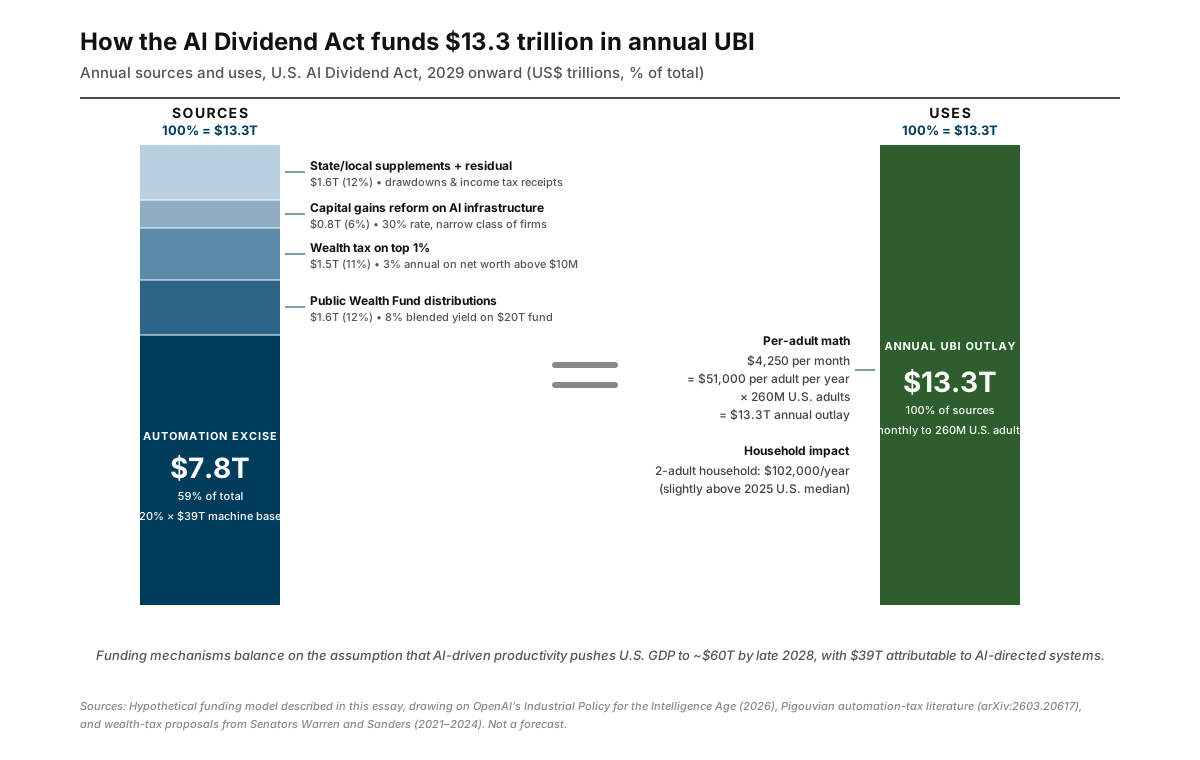
By the spring of 2030, those three constituencies stopped arguing and merged their bills. The AI Dividend Act passed in the second quarter of 2030. Roughly 260 million U.S. adults qualified for payouts from the AI Dividend Act. A monthly distribution of $4,250 came to $51,000 per adult per year, and $13.3 trillion in aggregate annual outlay. The figure was pegged to the 2025 U.S. median individual income. A two-adult household received $102,000 in annual distributions. By 2030, AI infrastructure had compressed the cost of food, energy, and basic digital services toward marginal-cost levels. The same nominal dollar bought what two or three would have a decade earlier.
For tens of millions of lower-middle-class households, the first monthly deposit was the largest sum of money they had ever held at one time. And it arrived again thirty days later. Credit card debt that a decade of wage labor had not cleared started to come down. Medical collections were settled. Car loans were getting paid off. A generation of Americans that had lived one layoff or one emergency room visit from ruin was, abruptly and for the first time in modern memory, not.
By the standards of 2026, the Act was still mathematically impossible. Even a $10,000 universal payment would have consumed nearly the entirety of federal tax revenue. A $13 trillion annual outlay sat well outside the 2026 fiscal envelope. What they had not priced in was that AI would not just shift the tax base. It would multiply it.
By late 2030, AI-driven productivity pushed U.S. GDP to roughly $60 trillion, more than doubling the 2026 figure in four years. Gross output attributable to AI-directed systems and robotics accounted for roughly two-thirds of that total. The funding model held up because the denominator had moved.
Four mechanisms funded the Act in combination: (1) automation and compute tax, (2) public wealth fund distributions, (3) wealth tax on the top 1%, (4) capital gains on AI infrastructure.
The framing that stuck, in the press and the halls of Congress, was that the United States had redirected a flow of compensation the economy had always produced. For most of American history, firms paid humans to do work and those wages supported household consumption. When the machines took the work, the wages didn’t disappear. They accumulated to the owners of the machines. The AI Dividend Act reclaimed that flow and sent it, monthly, to the citizens who had lost their role in the economy but not their claim on it.
The United States passed UBI policy first, but not alone for long. Other countries around the world followed suit and while the specifics diverged, within eighteen months of the AI Dividend Act, roughly a billion people were receiving some version of an automation-funded monthly distribution.
Financial stability was the floor. Everything that followed was built on top of it.
III. 2031: The Pyramid
Tens of millions of Americans had spent decades becoming good at something: a craft, a practice, a specialty, a career. The UBI deposits didn’t restore what had been lost. An identity built over decades was indexed to the work, and the work had been handed to machines that did it faster and never slept.
The first year of full UBI coverage was, for many, very difficult. Financial panic at least came with a problem to solve. Stability, once secured, left a quieter and harder question on the table. What is a life for, if not for the thing you spent your life becoming good at?
By early 2031, global consciousness had begun to shift toward an answer that had been available for thousands of years but had never, at scale, been possible to live: paid labor distracts from true fulfillment. For most of recorded history, work was a survival mechanism. Adults spent the majority of their waking hours securing the bottom two tiers of Maslow’s hierarchy: food, shelter, and safety. These were historically secured through income and employment.
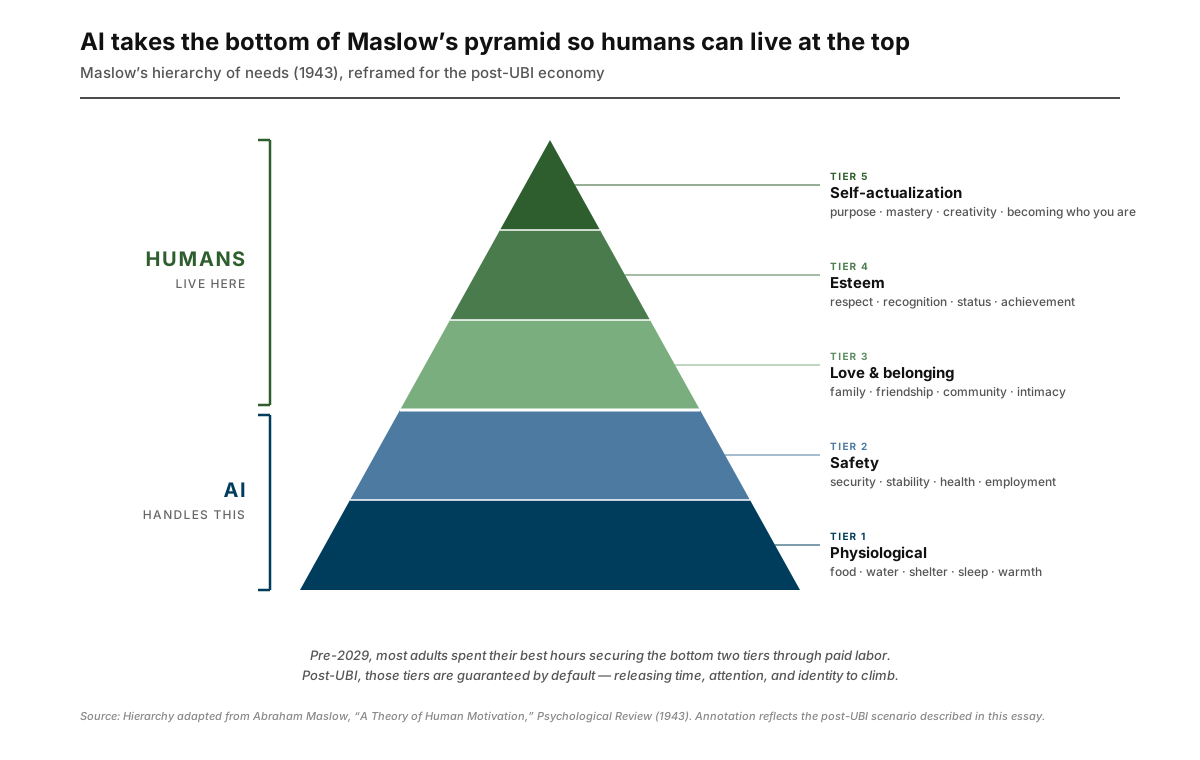
By the middle of 2030, AI had collapsed the unit cost of delivering the bottom two tiers. Food production per acre had tripled. AI was helping solve global warming. Distributed solar and grid-scale storage had pushed the marginal cost of electricity toward zero in most developed markets. Combined with a $51,000 annual UBI, the floor was abundant. AI elevated humans toward self-actualization, a place where creativity, mastery, and purpose thrives.
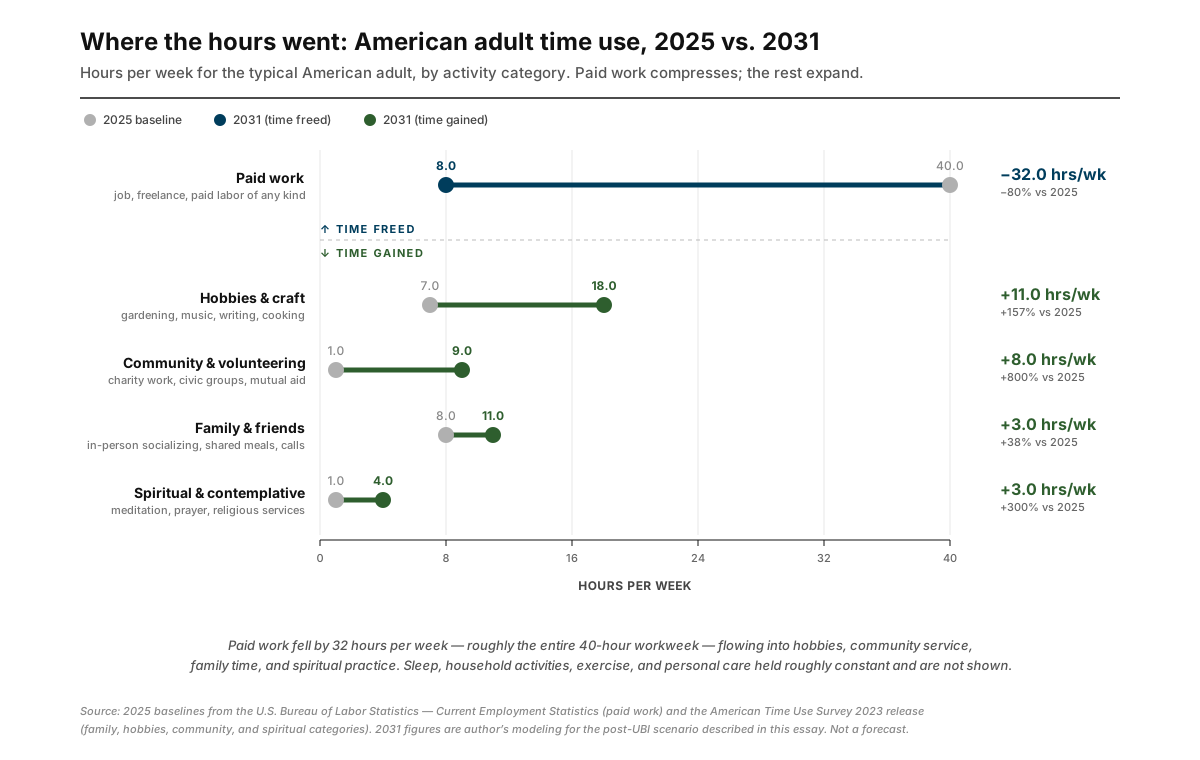
Time-use surveys run in 2025 and again in 2031 captured the largest shift in American adult behavior since the surveys had started being taken in the 1960s. Hours spent with family and friends rose by forty percent. Volunteering hours per capita reached an all-time high, surpassing the previous peak set in 1965. Community organization participation, in structural decline for four decades, reversed. Religious and contemplative practice attendance, which demographers had assumed would continue its generational slide, climbed for the first time since the 1950s, across every age bracket. Hobbies that required patience and presence such as gardening, woodworking, musical practice, writing, and cooking, reappeared in the daily time blocks that had been occupied, three years earlier, by commutes and meetings.
The scarcity and competition mindset that had organized modern life stopped making sense. When the bottom of the pyramid is solved for every adult in society, many of the status games jockeying for jobs and wealth started to disappear. When there were no more career ladders to climb, people started to turn their ladders into bridges.
Accumulating more wealth than you could spend in a lifetime began to look strange. In the place of earning, a different verb moved to the center of the culture: giving. Forbes replaced its wealth rankings with a Giving Power index in 2031. The leaderboard measured wealth deployed for charity, not wealth held.
The cultural norm that organized this shift didn’t require a law. It was called, in most places it emerged, Enlightened Altruism. The premise was simple: allocate a meaningful share of your time toward reducing suffering you perceived. Hundreds of millions of people, each directing volunteering hours toward various causes, actually started to build a better world. Many of the top 10% who continued working and accruing income above UBI became the strongest champions of global equality by donating large amounts to fund charities.
Loneliness, declared an epidemic in 2023, reversed as community participation and volunteer networks increased. Charities with narrow scopes and passionate founders outcompeted legacy bureaucracies for the best human talent, because the best human talent was, for the first time in modern memory, free to choose mission over wage.
Somewhere in this window, the AI approval curve crossed into positive territory for the first time since the crisis began. Because people had finally begun to experience abundance, time, and agency. And it was only possible through AI. Without AI, no radical productivity. Without radical productivity, no surplus to redistribute. Without redistribution, no floor. Without the floor, no room to move up the pyramid. The machine that had threatened us in 2029 was, by 2031, the thing that had handed us our lives back.
IV. 2032: The Second Enlightenment
The movement that began to take shape in 2032 was eventually coined the Second Enlightenment.
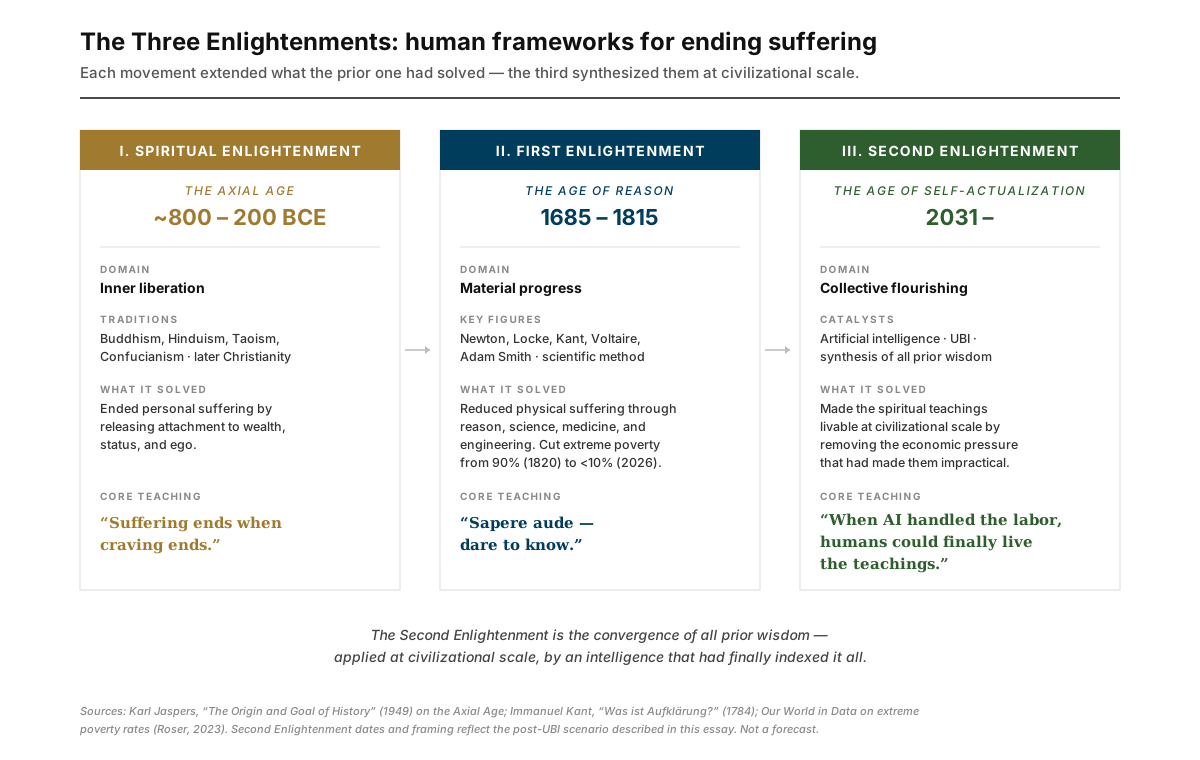
The First Enlightenment was the Age of Reason and Progress. From roughly 1685 to 1815, Western philosophy, science, and technology set out to increase quality of living through medicine, agriculture, and industrial production. Two centuries ago, 90% of humans lived in extreme poverty. By 2015, that number was under 10%.
The Second Enlightenment was the age of Self-Actualization and Charity. It used artificial intelligence to remove the economic pressure that had always kept humans pinned to the bottom of Maslow’s pyramid. The word “enlightenment” carries a spiritual meaning for many, which makes it all the more fitting for what unfolded. Roughly 2,500 years ago, Eastern traditions like Buddhism and Hinduism produced the framework for attaining enlightenment at the individual level.
Eastern religions taught that we suffer because we try to grasp at things that are constantly changing, expecting them to provide lasting security. To end the suffering of attachment, one had to shed the clinging to wealth, status, and self. Nirvana, in Buddhism, is the blowing out of the fires of greed, hatred, and delusion. Western Christianity had long described a utopian society living with one heart and one mind, committed to charity, and organized such that there was no poverty.
This wasn’t just a religious movement, however. Psychologists, historians, and social scientists had been publishing the same findings for decades. Happiness comes from thinking less about yourself and more about others. From sacrificing for others, practicing gratitude, and investing in relationships. Adults with strong community ties lived longer than adults with high incomes. Meaning was generated by what one gave, not what one received.
The Second Enlightenment was a convergence of global intelligence accrued across centuries. Eastern philosophical teachings on how to attain enlightenment. Western religious teachings on building a unified global society. First Enlightenment frameworks on progress through technology, reason, and science. AI was the accelerator. It had indexed all of the teaching across recorded history and made it available to every human simultaneously.
V. What Makes Us Human?
Enlightened teaching had been nearly impossible to live at scale, because the economy was built on the opposite. People had to compete against each other for scarce jobs to make enough money to survive. Money became tied to security which became tied to identity. The disappearance of jobs drained job titles of their identity-storing function. And intelligence became a commodity. A farmer in rural India had the same access to cutting-edge medical research as a Harvard-trained physician. The differential that had organized much of the social hierarchy was gone.
The reversal in public sentiment towards AI, plotted across the four-year arc, tells the story. In 2029, AI approval sat in the low teens, but by 2030, with UBI stabilizing balance sheets and the cost of living beginning its structural collapse, the curve turned. By 2032, approval surpassed intial sentiment when AI was first released. Because people finally understood what AI was for. Automation and abundance freed us. AI made resources cheap and UBI distributed the surplus. This freed us from the labor that had occupied human time for all of history. Humanity moved up Maslow’s pyramid all at once.
For most of the crisis years, AI was deeply misunderstood. The public had called the AI companies crooked for training their models on human creations. The outrage was legitimate. It was also, in retrospect, the wrong half of the story. It was only by 2032 that enough people could see the other half clearly. Every time an AI generated a beautiful image, it was because a human had first painted one. Every time it wrote a compelling story, it was because a human had first told one. Every time it answered a question about meaning, it was because a human had first explored and written about it.
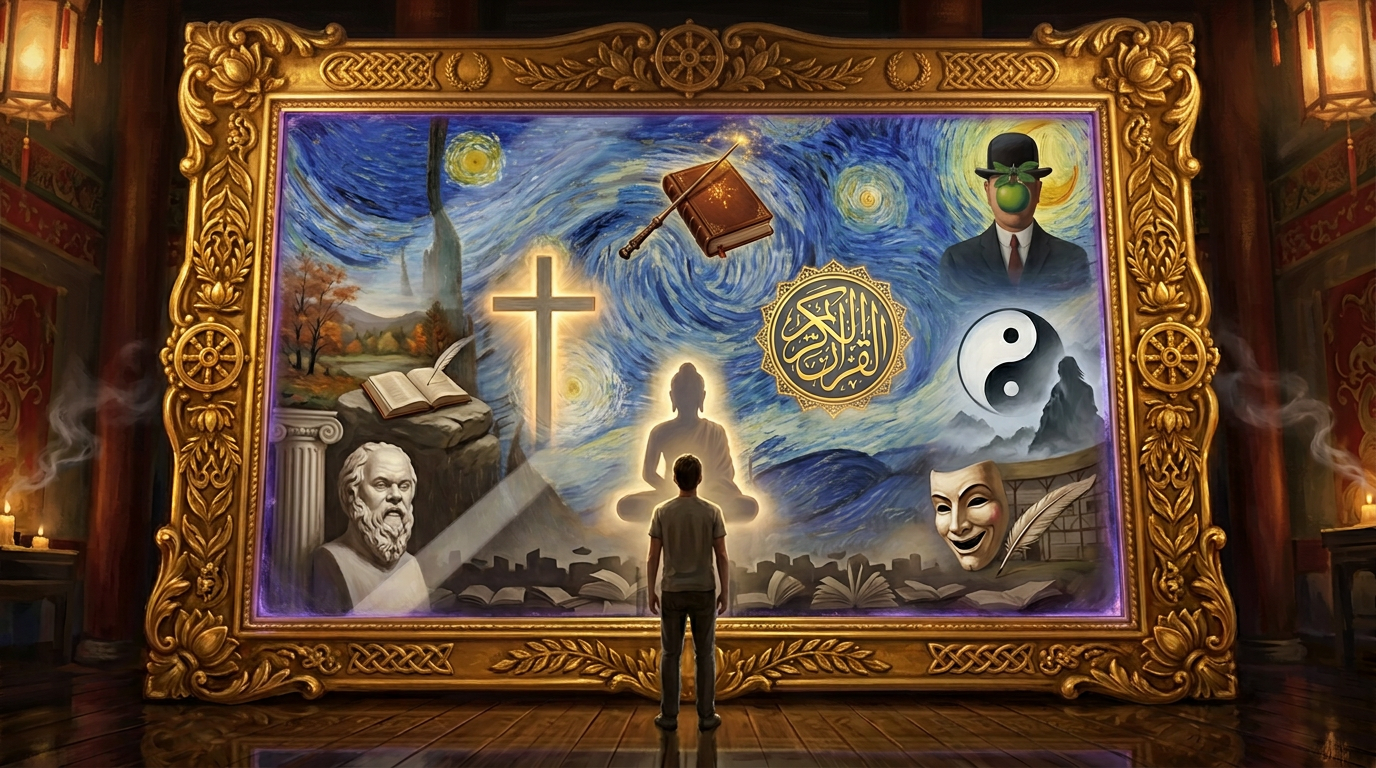
Once the panic lifted, AI began to read as something closer to inheritance. Van Gogh and Magritte were present in the images AI produced. Jesus, Buddha, and Muhammad were present in its answers on spirituality. Socrates, Ralph Waldo Emerson, and Lao Tzu were present in its answers on philosophy. William Shakespeare, C.S. Lewis, and millions of other authors of the literary canon were present in its ability to tell stories that moved us.
AI concentrated everything humanity had produced into a single surface and handed it back. It served as a mirror of the good and evil in all of human history and it helped us pattern match at a scale no human could do by themselves. It reflected back to us what we wanted to see. If we asked corrupt questions, it gave us corrupt answers. If we asked enlightened questions, it gave us enlightened answers.
These new capabilities didn’t stop humans from doing what we do best: creating. It just allowed us to create without limits. Without the limits of time or the pressure of creating something others would value so we could sell it to put food on the table. We continued to create because it fulfilled us. Our ability to create is what makes us human. AI doesn’t truly create, it reflects.
AI helped us finally realize that our lives were never meant to be defined by a job title, wealth, or material possessions. That identity-framing had been a survival necessity, but when it broke, human society began to flourish. We learned to wield AI effectively for good. And it turns out that being intelligent wasn’t what made us the most important creature on the planet, it was wisdom. Jeff Burningham’s words in The Last Book Written By a Human served as a manifesto for the movement.
The First Enlightenment taught us we think, therefore we are. The Second Enlightenment is teaching us we are, as evidenced by our consciousness. It is the growing understanding that we can observe the activity of our intelligent minds without identifying with them or the ego they seek. The realization that we are not human doings. We are human beings.
AI did end up automating most of the jobs. But instead of ending society, it ended our dependence on work for meaning. And it helped us build a more enlightened world.
Afterword
It’s not 2032. It’s 2026. And most of society may not yet realize how destabilizing artificial intelligence will be in the very near term. Some have even called it humanity’s last, great test. Will we steer AI for good? Or will we let it destroy us?
Again, this is a fictional memo with bold assumptions on both how bad the fall could be and how good the recovery could be. It will surely be somewhere in the middle. Humanity isn’t all good nor is it all bad.
Maybe I’m wrong and the future will keep humming along like it always has. But if you feel the same gravity of the moment that I do, here are things we can do today to prepare:
- Push for AI policy early. The longer the gap between job displacement and redistribution, the deeper the bottom gets.
- Start detaching your identity from your job title. What actually makes you human? When do you feel the most alive? How would you spend your time if a robot could do your job for you?
- Stay optimistic, and steer toward the best case. The bear case writes itself. The bull case has to be built.
If AI proves to be the most powerful technological revolution in human history, maybe it’s also what finally pushes us into our most enlightened society yet.
Appendix: AI Dividend Act
As a former Accounting major, I couldn’t help but go down the rabbit hole of trying to model out how UBI of $51k per adult might be theoretically possible. It requires some unprecedented assumptions about how AI will radically increase GDP. So don’t take this as proposed policy, view it as a thought experiment.
The AI Dividend Act proposed in this memo includes a $13.3 trillion annual outlay that was financed through four primary mechanisms, with a residual filled from supplementary sources.
- Automation and compute excise. The primary revenue base. A blended 20% effective rate on machine-attributable output generated $7.8 trillion annually. The rate was less than half of what middle-to-upper-income American workers had paid in combined federal, state, and payroll taxes on labor income for decades, applied now to the machines that had replaced them.
- Public Wealth Fund distributions. The Fund, seeded with mandatory equity contributions from the frontier AI firms and built up through ongoing receipts, held approximately $20 trillion in diversified assets by late 2029. At an 8% blended yield, it contributed $1.6 trillion in direct distributions.
- Wealth tax. A 3% annual tax on household net worth above $10 million generated approximately $1.5 trillion per year. The base rate was high by historical standards but unremarkable against the scale of concentration it was addressing.
- Capital gains reform on AI infrastructure. A 30% rate on realized gains from the narrow class of AI infrastructure firms whose market caps had lapped the rest of the economy generated another $0.8 trillion, applied selectively to the sector where gains had become structurally disconnected from broader economic participation.